
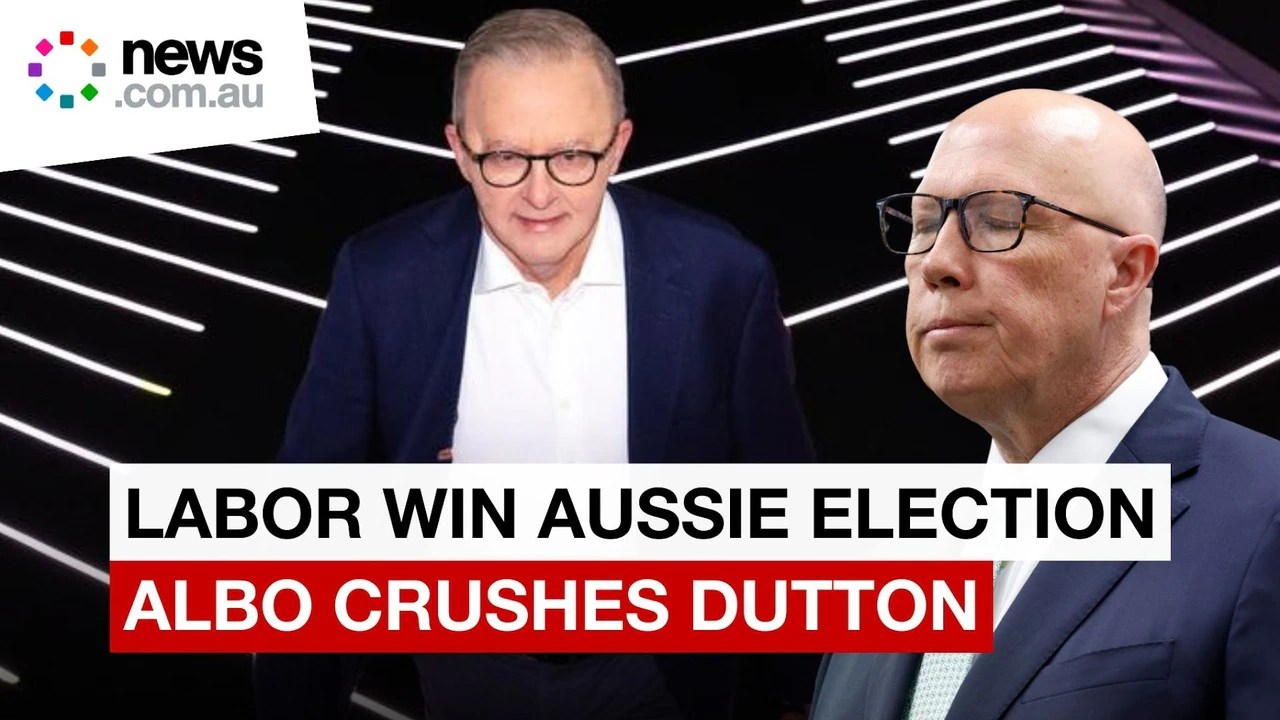
We’ve just had our federal election in Australia this past weekend, with Anthony Albanese’s Labor Party being re-elected for the next term of three years. I added this piece to my blog last year https://porsche91722.com/2024/11/30/australia-what-do-you-want-from-your-government/
Although most election campaigns descend into slanging matches, this one was particularly vicious from The LNP, with name-calling and smear tactics starting early. Their leader, Peter Dutton, was especially combative, spreading what he claimed was information, but in reality, much of it was misinformation. Let’s be honest—these weren’t just half-truths or misleading claims; many of the policies put forward were outright lies and poorly conceived, with no chance of gaining traction among voters.
Dutton, for reasons known only to himself and his inner circle, advanced several ill-advised policies seemingly designed to pander to the party’s base. Proposals such as establishing nuclear power stations and aligning himself with Donald Trump did little to broaden his appeal. His attempt to present himself as a “strongman” only solidified his image as a loudmouth bully—an image shaped during his time as Home Affairs Minister in Scott Morrison’s government. The voters saw through his rhetoric, rejected both his leadership and his party, and effectively removed him from the Australian political landscape. He was soundly beaten by the Labor candidate Ali France in his outer Brisbane electorate. His inability to connect with female voters was another significant factor in his downfall. The LNP’s outdated attitudes toward gender equality, its continuous subservience to the ultra-right-wing media, and its resistance to giving women an equal voice have all contributed to its growing irrelevance among younger voters.
Further compounding this was the party’s decision to oppose reconciliation efforts with First Nations Australians. Dutton’s & the LNP’s strategies might have resonated fifty, twenty, or even ten years ago, but in this election—the first where Millennials and Gen Z outnumbered Baby Boomers—those old, regressive policies simply failed to resonate. Dutton and his colleagues were flogging a dead horse, clinging to outdated ideas that no longer reflect the values of modern Australia.
With Australia dominated by two major political parties, many Australians have long sought a genuine alternative. The Greens were once expected to fill that void. I’ve previously supported them—giving them my second preference behind Labor and directly voting for them in the Senate. Historically, the Greens held strong environmental values and policies aligned with their name. However, they seem to have lost their way in recent years.
In an effort to broaden their platform beyond environmentalism, the Greens have adopted obstructionist tactics—such as opposing housing reform, which have alienated many supporters. Rather than offering constructive solutions to Australia’s housing crisis, they’ve been perceived as blocking progress. They gave support to fringe & often radical protest groups, like the CFMEU. In trying to make themselves more relevant to the Australian voting public, the Greens’ decision to spotlight the Palestinian movement and broader Middle East issues as a central political concern in Australia has further alienated them from their original grassroots base rooted in environmental activism. For many Australians, including myself, the best way to describe our perspective on the Palestinian issue is that while we support progress and positive change in that region, it feels distant and disconnected from the pressing challenges we face at home. By voting against Labor’s housing reforms after they had passed the lower house, the Greens effectively stifled momentum to alleviate the housing market pressure. This approach has cost them support at the ballot box. Although the Greens’ overall voter numbers nationwide did not change significantly compared to the last election, their support across individual electorates declined noticeably. This shift resulted in several of their former parliamentary members losing their seats.
In this election, I placed them further down my list of preferences. I still consider myself a strong supporter of green policies and hope the new Labor government will take stronger action on curbing carbon emissions & making some headway into improving our drastic housing market situation in Australia. A revitalized, focused Greens party could still play a critical role in shaping environmental policy—but only if they return to their core mission and rebuild trust with their original supporters.
Another interesting observation from the election result is the response from polling organisations, whose predictions varied significantly throughout the campaign. Media outlets—depending on their left- or right-leaning editorial stance—seemed to selectively highlight polling data that aligned with their own narratives. The outcome, however, was that none of these polls came close to predicting Labor’s landslide victory. Despite claiming a margin of error of plus or minus 5%, their projections were far off the mark.
So, where to from here?
I’m glad that Labor won, based on the policies that they presented, but for the sake of good governance, the country also needs an effective opposition—one with strong policy platforms that can hold the sitting government accountable. A healthy democracy depends on the presence of diverse, well-argued perspectives, not just from the ruling party, but from a capable and constructive opposition as well.
Unfortunately, the previous LNP opposition failed to meet this standard. Rather than offering thoughtful alternatives or engaging in reasoned debate, they seemed more interested in obstructing everything the Labor government put forward. Their proposals lacked credibility and vision, making it clear they weren’t focused on contributing meaningfully to the policy conversation. To many Australians, the Liberal-National Party (LNP) appears to be heavily influenced by ultra-conservative media conglomerates such as those owned by Rupert Murdoch, which often serve to amplify their political agenda. The LNP has long enjoyed the support of far-right and conservative business interests that prioritize their own agendas over the broader national good.

When comparing party leaders, Anthony Albanese came across as a genuine figure with the interests of Australians at heart.

In contrast, Peter Dutton, with his forced, creepy, insincere smile, resembled more of a Trump-style imitator.

Leadership is everything, and Australians made it clear they preferred someone authentic—someone offering realistic and achievable election promises, rather than indulging in outlandish, American-style political hostility.
In my view, the National Party—the “N” in LNP—which primarily represents regional farming and mining communities, should seriously consider breaking away from the Liberals. In this election, the Liberal Party—the “L” in LNP—which has traditionally positioned itself as the party of urban elites, lost the majority of its metropolitan seats in the Federal Parliament, underscoring a growing disconnect with urban Australia.
In the immediate post-election analysis, as they reflect on “what went wrong,” the Liberals remain stubbornly attached to the belief that their policies were sound and that voters simply misunderstood them. This kind of arrogance was precisely what cost them the election—and they still seem unable to grasp that fact.
However, both Libs & Nats understand that without this relationship, neither holds enough political weight or credibility to be truly influential on their own.
So, we are left with this unholy alliance in opposition, which, from a National Party perspective, only appears to be doing themselves more harm than good.
A strong and effective opposition is essential to good governance—and, ultimately, to a healthier and more accountable democracy. However, one constant in politics is that, regardless of which party is in power, greed, corruption, jealousy, and the pursuit of power inevitably lead to self-destruction.


