
Reading time 26 minutes


To understand why people chose to leave the countries where they were born and raised, it is essential to consider the conditions they lived under at the time.
Life in Germany/Prussia in the early to mid-1800s
Germany, in particular, has a long history of war and civil unrest. Over the past thousand years, the country has been involved in or instigated approximately 100 wars. Germany didn’t just engage in conflicts with its European neighbors; it also participated in wars in Africa, North, Central, and South America, China, and other parts of Asia. Closer to Australia, Germany annexed part of Papua New Guinea in 1884, along with the islands of New Britain and New Ireland. However, an Australian expeditionary force expelled them in 1914.
In just the last 110 years, Germany was responsible for starting two World Wars. The decades before and after 1860 were similarly turbulent. Like many other parts of Europe, Germany saw ordinary citizens grow weary of ongoing battles and political, religious, and sectarian conflicts. Large numbers sought to escape the never-ending turmoil. For many, relocating to a neighboring European country was not an option, as those nations faced similar struggles.
At the time, readily available information—like we have today through the internet—was still 140 years away. People couldn’t simply visit an embassy to discuss migration options with a diplomat. There were no brochures, catalogs, or phones to facilitate communication between countries. Like much of Europe, Germany’s population had been conditioned to live in a state of continuous conflict, and this reality was beginning to take its toll.
Between 1845 and 1855, more than a million Germans fled to the U.S. to escape economic hardship and political unrest, exacerbated by riots, rebellions, and, ultimately, the revolution of 1848. The mid-1800s saw rising political unrest. The 1848 revolutions brought calls for democratic reforms, but most were suppressed by the Prussian monarchy & aristocracy.
Hard physical labour and long hours dominated life for the working classes. Disease outbreaks (cholera, typhus, tuberculosis) were common. Harsh winters could bring famine if harvests failed. The strict class system meant limited upward mobility— The upper elite classes held political and economic power well into the 19th century.
Industrialisation in Berlin and other towns was beginning to draw rural people into factories, leading to urban overcrowding and early working-class movements. Military service was compulsory for men, reflecting Prussia’s militaristic culture.
Food Staples: rye bread, potatoes, cabbage, pork, dairy products. Meals were simple: soups, stews, bread with lard or cheese. Beer was common (safer than untreated water), with schnapps for special occasions. Seasonal shortages meant some winters were lean, especially for the rural poor.
Making matters worse, in 1817, Frederick William III of Prussia forced the merger of the country’s largest Protestant churches (Lutheran and Reformed) into a single entity—the Prussian Union of Churches. This led to the persecution and suppression of the confessional beliefs of orthodox Lutherans.
By the 1860s, Prussia and the independent German states faced a growing population that had outstripped the available land. Industrialization failed to provide enough well-paying jobs, and political and religious freedoms were limited. Additionally, various German governments had begun imposing strict moral codes. With limited land, few opportunities, and increasing dissatisfaction, many Germans sought a way out. However, by this time, the U.S. had begun restricting European immigration.
On the other side of the world, Queensland, Australia, was offering land almost for free, along with incentives for farmers to emigrate to the new colony. When Queensland government representatives arrived in Germany promoting this “promised land”—where people could own property, live freely, practice their religion without fear of persecution, and avoid excessive government interference—it must have sounded like an opportunity too good to pass up.
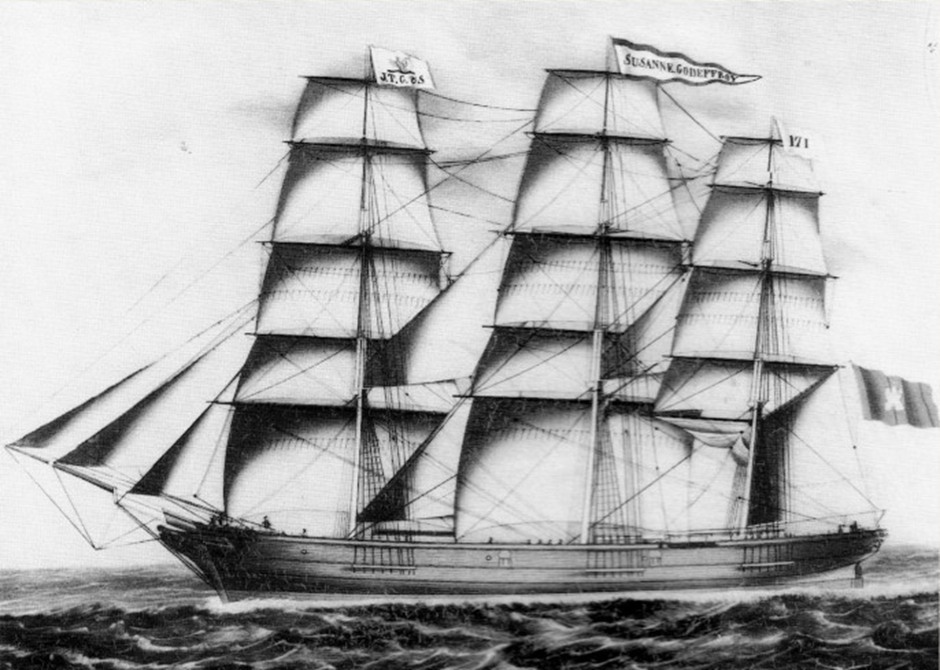
dep. Hamburg 6 May 1865
arr. Moreton Bay 6 Sep 1865
Captain: H. Müller
Agent: J. C. Heussler & Co.
Carl Friedrich Wilhelm Krueger was born on 22 August 1822 in Pinnow, Prignitz, Brandenburg, Germany, and Johanna Elisabeth Grambauer was born on 18 September 1828 in Siehausen, Brandenburg, Germany.
The couple were married on 17 August 1850 in Berlin.
The family’s departure for a new life in Australia
My great-great-grandparents, Carl and Johanna Krueger (née Grambauer), departed Hamburg, Germany, on May 6, 1865, aboard the ship Suzanne Godeffroy, bound for Australia. Carl was 42, and Johanna was 37. They traveled with their five children: Carl (15), Wilhelm (11), Ferdinand (9), August (5), and baby Emilie (1).
Originally, they had planned to settle in South Africa but decided against it due to overcrowded ships. At the time, voyages to Australia were notoriously treacherous. Ships frequently encountered violent storms, and some disappeared without a trace. Even surviving such perilous weather did not guarantee a safe arrival, as disease often spread through the cramped quarters, claiming many lives along the way. On the Suzanne Godeffroy alone, 33 passengers died, including infants born at sea.
By the time the ship reached Moreton Bay on September 6, 1865, food supplies were spoiling, and fresh water was running low. Upon arrival, passengers were ferried upriver to Brisbane on a steamer named Kate.

The Kruegers, along with other newcomers, disembarked at the old South Brisbane immigration depot, where conditions were far from welcoming. Many recent immigrants at the depot had been waiting for weeks, some cautioning that coming to Australia was a mistake. The Kruegers stayed at the depot for two weeks while Carl looked for work, though jobs were scarce and some unscrupulous locals exploited the immigrants’ desperation by offering meager wages. Crossing the world with such uncertainty was a significant gamble. Tales circulated of immigrants in the U.S., Canada, and South Africa who found that promises made by foreign governments were misleading, with some ending up destitute. The Kruegers must have questioned their decision to come to Australia. Eager to change their situation, the family moved to Ipswich and found work on a cotton farm in Redbank Plains, where Carl and the two eldest sons, Carl Jr. and William, worked for the next year.
Carl and Johanna had chosen Queensland with the hope of acquiring land through the “Alienation of Crown Lands Act of 1860.” In brief, the act allowed applicants to acquire agricultural land by identifying it on a map and paying 20 shillings per acre, provided they occupied and cultivated it within six months, at which time a Deed of Grant would be issued.
Fortunately, the Kruegers weren’t alone; many other German immigrants were arriving in Australia around the same time, although most spoke little or no English and were thus largely at the mercy of authorities. The Kruegers and other European settlers were directed to the West Moreton area, where large plots had been surveyed for farming under the Crown Lands Alienation Act. After spending time in Ipswich, Carl and Johanna eventually established a 120-acre farm in Rosevale in the West Moreton district, situated between Boonah and Ipswich.
Upon the arrival of the Suzanne Godeffroy, a local report announced her docking: “The Susanne Godeffroy, from Hamburg, arrived this morning. She reports all well.”
Telegrams from Cape Moreton revealed that two immigrant ships arrived in the bay on the previous day: the English ship Melberby from Liverpool with about 500 passengers, which also reported rough weather; and the German ship Susanne Godeffroy from Hamburg with 401 immigrants, who likewise reported that all were well. The steamer Emma passed the Suzanne Godeffroy, confirming she needed fresh provisions.
The Journey Up the Brisbane River – “Kate” and Other Vessels
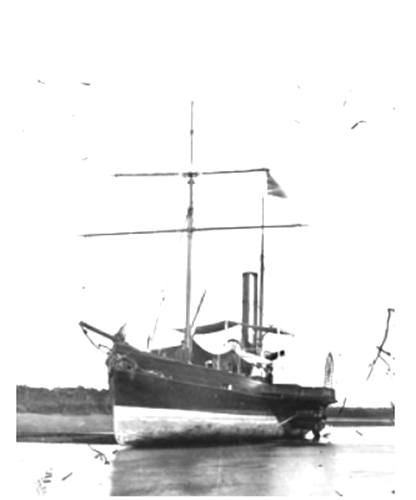
Most migrant ships couldn’t navigate the shallow Brisbane River past the bay. Instead, passengers were transferred in Moreton Bay to vessels able to travel upstream. Passengers on the Suzanne Godeffroy completed their journey aboard the Kate, a 150-ton iron paddle-wheel steamer designed for Brisbane’s river trade and built in 1864 in Newcastle-on-Tyne. The Kate, fitted with cargo space and modest passenger accommodations, was acquired by the government in 1865 and used to transport officials to immigrant ships and to bring immigrants up the river to Brisbane.
Immigration Depots and Conditions in Brisbane
Upon reaching Brisbane, passengers experienced “all confusion and bustle,” as described by an observer in 1864. Excited passengers hauled luggage up to the wharf, reuniting with friends or mourning the loss of loved ones who hadn’t survived.
The South Brisbane immigration depot was described as more of a “large wooden barn” than suitable housing. In October 1863, The Brisbane Courier detailed the depots, describing them as miserable accommodations, calling the conditions “a most uncomfortable cell in the Brisbane gaol,” lacking ventilation and exposed to extreme summer heat. The largest shed, near Towns’ wharf, housed around 200 men, women, and children in cramped, unsanitary quarters that posed serious health risks, particularly to women and young children. Arrangements for cooking and washing were inadequate, and personal space was nonexistent, with belongings mixed haphazardly in crowded, undivided spaces.
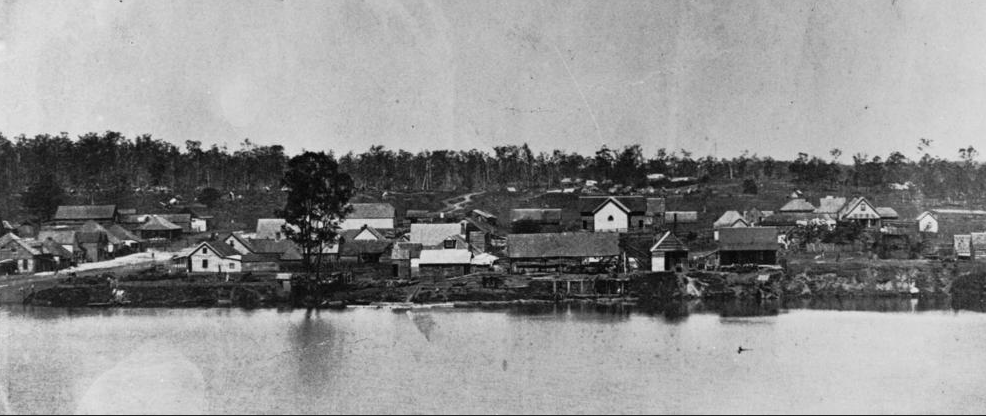
An adjacent shed housed about 100 single women in equally poor conditions, though they were separated from men and families. A third building near Hope Street was better ventilated, though similarly lacking in proper space. Nearby, German immigrants arriving on the Beausite had erected tents, supplemented by native-style gunyahs, creating a healthier albeit exposed option. With immigration increasing, the depot’s inadequate accommodations raised concerns that without improvements, summer months would see increased mortality rates.

NB- see near neighbour F Lobegeiger (74) & next door block (45) owned by William Krueger
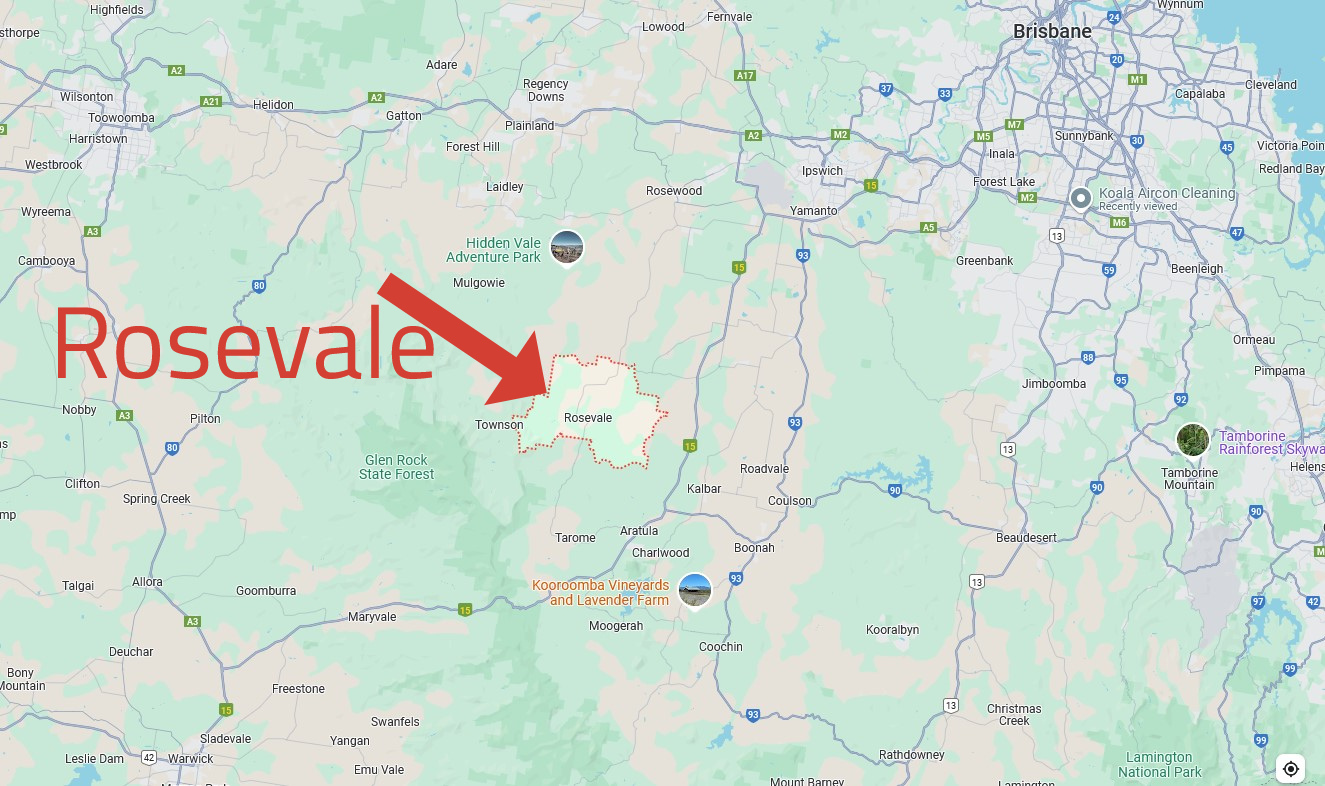
There was no time to waste. There were conditions to be met & time frames in place to get access to land ownership. Clearing the scrub, building a dwelling, erecting fences, and planting crops had to be commenced immediately. The Land Ownership Act was legislated, to get farms up and running, as soon as possible. The Government wanted farmers to be growing food crops and producing dairy products and meat from the grazing of cattle, sheep, and pigs, to feed the rapidly growing population of Queensland. It must have been a daunting task for the new arrivals, familiar with Northern Hemisphere farming practices having to quickly get used to the local climate, animals, plants & insect pests, and to start producing a result within the time frames they were given, to qualify for the migrant land grants. The success of attracting migrant families to Queensland was also rapidly increasing the population of the new colony. Locally produced food supplies were crucial.
The pages shown below are taken from the Krueger Family Bible & compiled by Pastor Carl FWC Krueger (Carl & Johanna’s son).
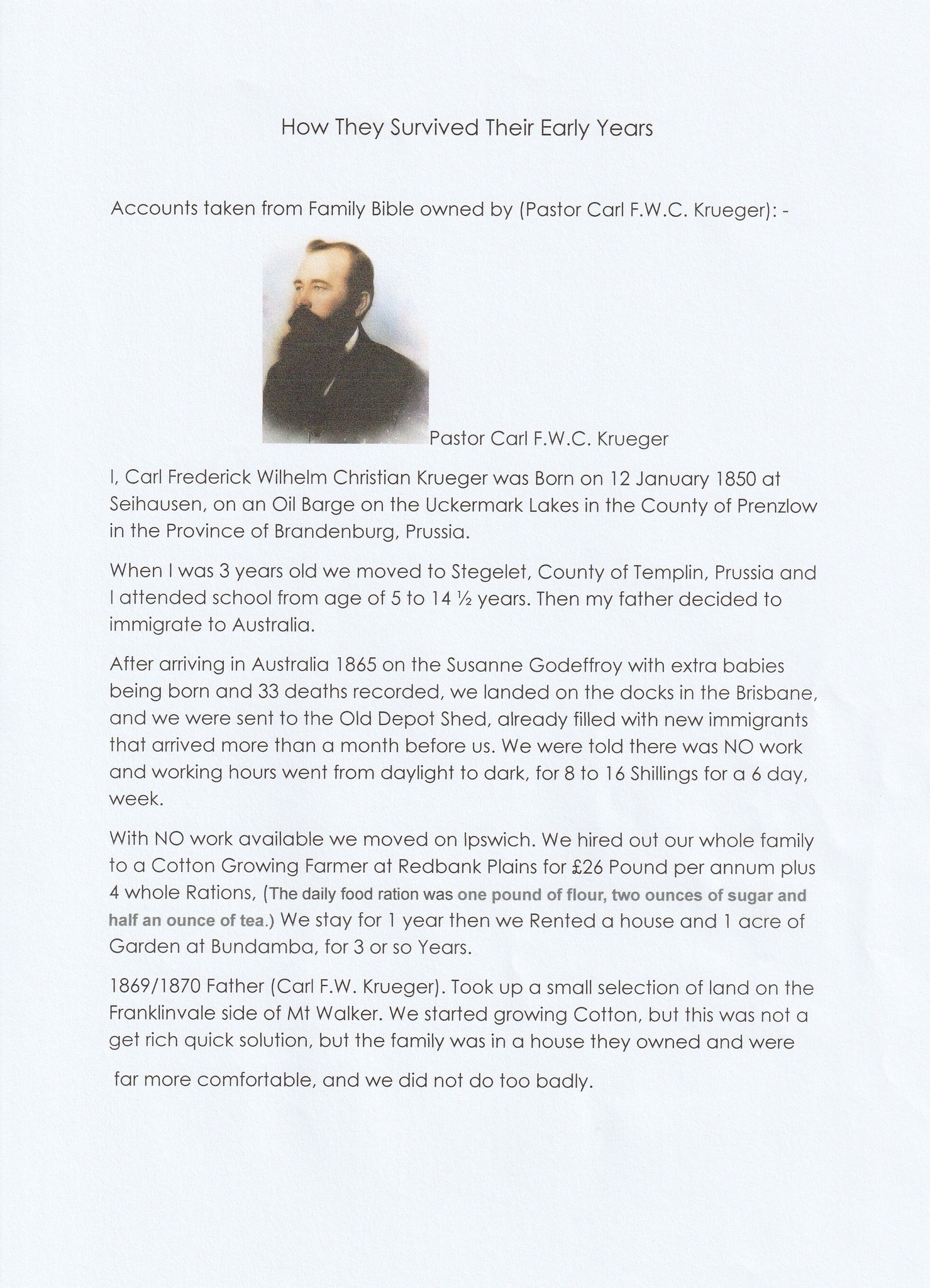


In the first half of the 1860s, South East Queensland had suffered severe flooding, but by the back end of the decade, the state was then struggling under drought conditions. Most of the new arrivals, had the bare minimum of equipment to set themselves up, to build a roof over their heads and construct fences and commence land clearing. Practically all of the work was done with hand implements. Many of the new German immigrants banded together to help each other out to get the work completed. This no doubt, facilitated and cemented, the lifelong bonds, that the early pioneer farming families had with each other.
On 2nd September, 1867 the family welcomed their only Australian born child, a daughter, Anna Elizabeth.
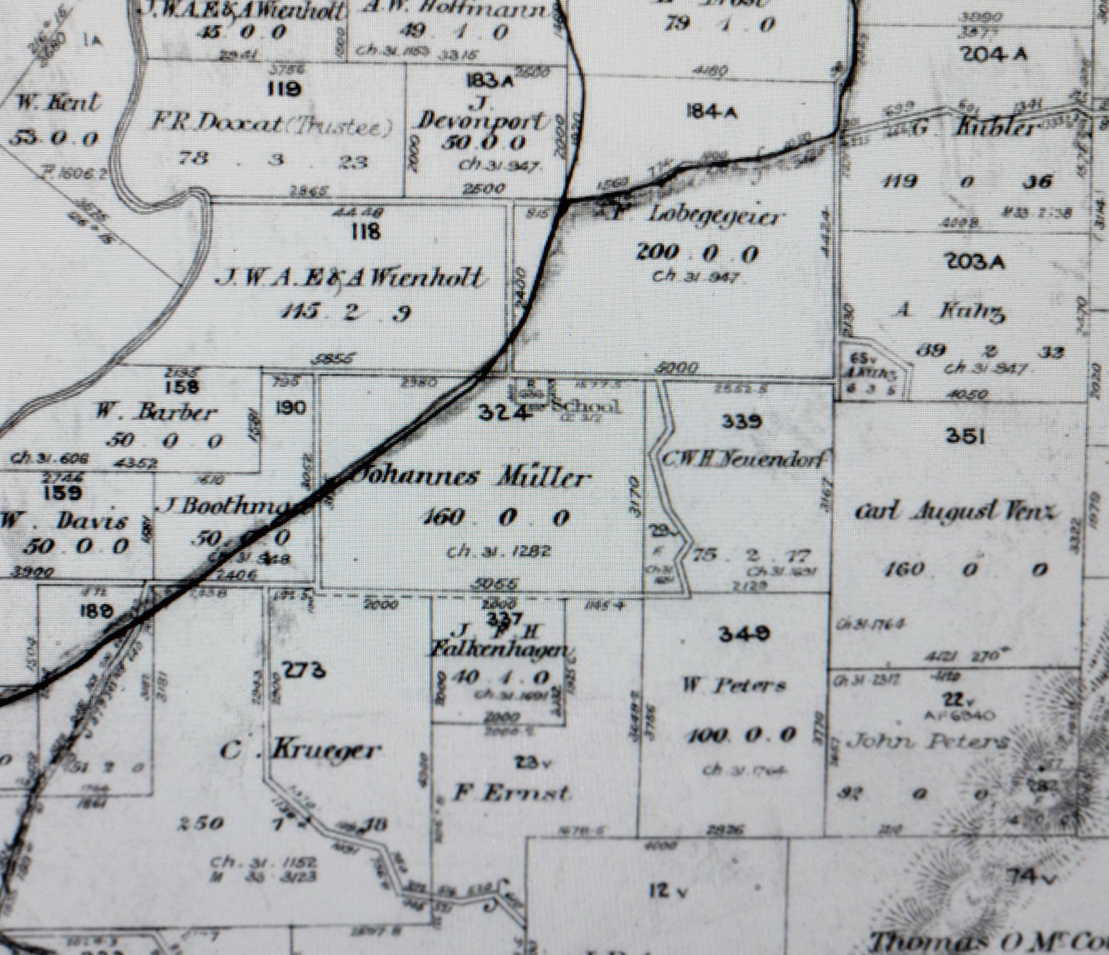
Carl and Johanna Krueger must have been doing something right, as they were increasing their land holdings further up into the Fassifern Valley. They purchased lot 273 near the town of Engelsburg (Kalbar) where they then moved to, and built a home. Their sons, Carl jnr & August also purchased land nearby, where they too, commenced farming.

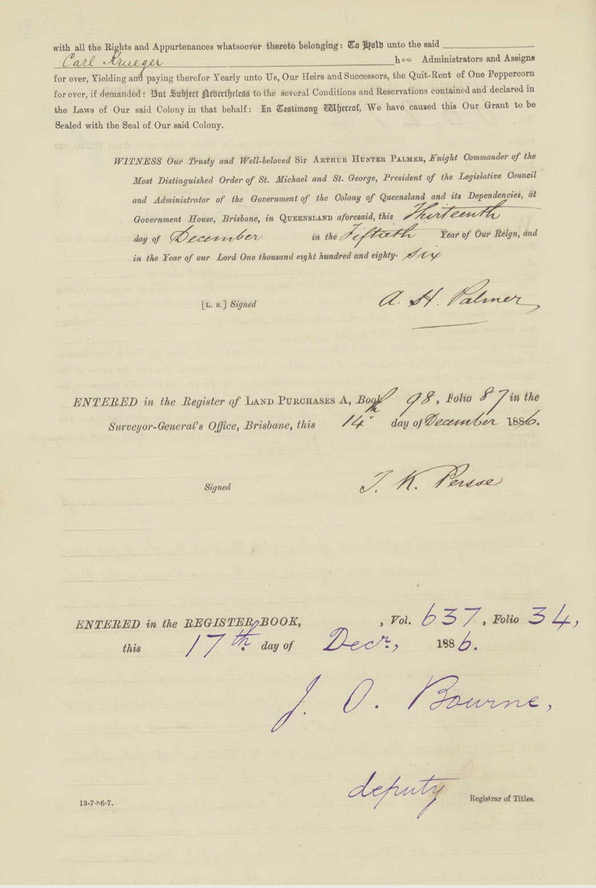
Practically all the German new Australians held strong Christian beliefs which they had brought with them from the old country, belonging to either the Baptist, Lutheran, or Methodist churches. The various religions all built their own places of worship in the Fassifern Valley. Many Protestant & Catholic families from England, Scotland & Ireland also made the move to Australia during the back half of the 19th century. As I’ve mentioned in other posts on my ancestors, the many different races and religions were inclined to stick together. These days, in the 21st century, we’re quick to label it as racial and religious bigotry, however, I genuinely believe that all of the first settler families from all nationalities who arrived in Australia, and their following generation, were a product of their times. The Germany of the 19th century, that our ancestors had left behind was an ultra-conservative country with grim de-humanizing laws in place. They weren’t in a position to get a higher education & access to other opinions and ideas. The early settlers were living in a bubble of their close-knit community. Language difficulties also meant they tended to stay close to others they could communicate with. They spoke the German language at home, at church, and dealing with many of the local merchants who were also German immigrants. By the late 1800s, schools and proper education systems had started to be implemented across Queensland. Many of the original pioneer German Baptist churches were only converting to English language services by well into the 1900s.
Taking into consideration that their pioneering parents had moved from the other side of the world, the German settlers’ young adult sons and daughters who had come to Australia certainly didn’t travel too far to look for a future partner. As the old Fassifern land map shows, the Kruegers, Mullers, Lobegeigers & Kublers (all my relatives, some of whom were Great Great Grandparents) were practically next-door neighbors. These and other familiar German family names appear on many records and maps of the Fassifern district’s history.
By the beginning of WW1 in 1914, many families were starting to experience anti-German sentiments that developed at the beginning of the war in Europe. As ludicrous as it sounds, it became such a problem that some individuals were placed in internment camps. These Australians (of German heritage) were considered to be spies or sympathetic to the cause of the German Empire, supposedly feeding information back to the “homeland”. The authorities soon worked out that some of them were farmers and were needed to keep the food supply chains in place so that ridiculous notion was soon somewhat discarded. However, it didn’t stop over 4000 Australian people with a German background from being locked up during 1914-1918. There were also plenty of local Fassifern Valley young men with German ancestry who joined the Australian Armed Forces to serve overseas and fight against the Germans during the war. Carl & Johanna’s grandson, John (Jack) Lobegeiger was killed in action in WW1, fighting for the Australian Army at the battle of The Somme at Villers-Bretonneux in France. Unfortunately, some of the German town & district names around the Fassifern Valley and across Queensland were changed during the period of WW1 due to this prejudice. The town of Engelsburg was changed to Kalbar in 1916.
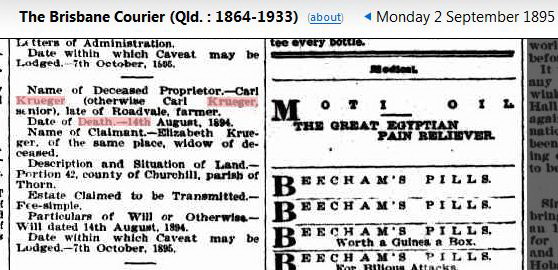
Carl Krueger Snr died on 14th August 1894 aged 72, at Roadvale, with his wife Johanna Krueger passing on 13th December 1902 aged 74. They are both buried in the Engelsburg (Kalbar) Baptist pioneer cemetery.


Carl and Johanna’s daughter Emilie Albertine Louise Krueger (my Great Grandmother) was born on 16th May 1864 in Steglitz Germany. Barely one year later, the family had left Germany to find a new life in Australia.
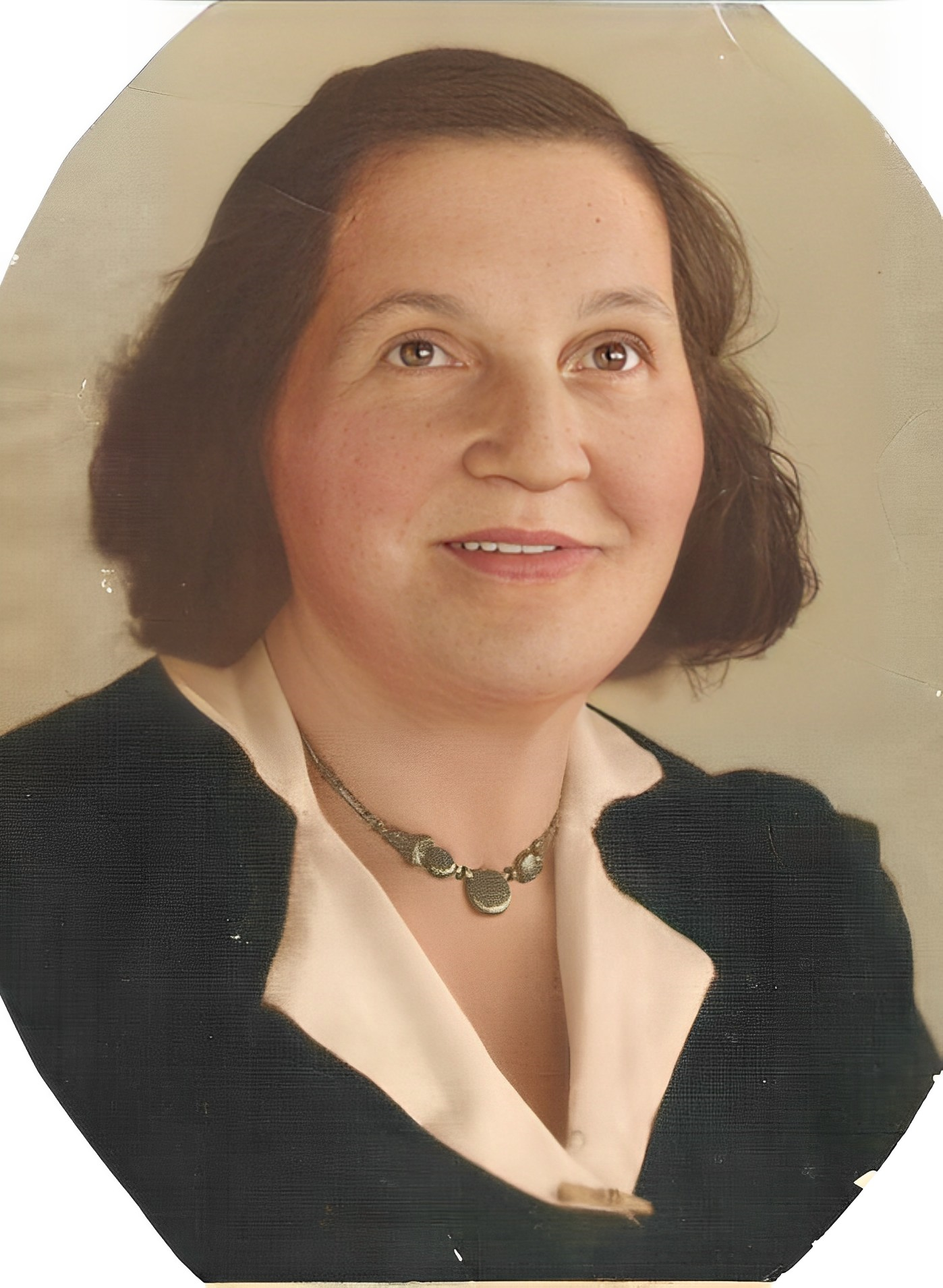
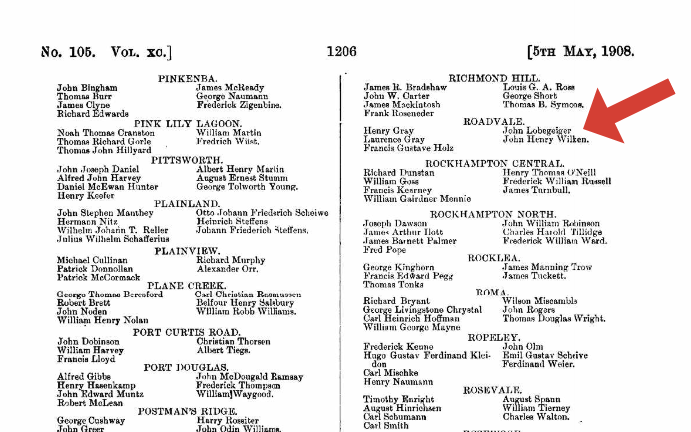
Emilie (or Amelia) Albertine Louise Krueger had arrived in Australia with her parents & four siblings in September of 1865. The family settled at Roadvale where they took up farming about 12 months after their arrival. Most of the German farming families arrived in Australia fully literate, but lacking in english speaking skills. The Fassifern Valley & surrounding district was heavily populated with many of their fellow countrymen arriving in Australia in the mid to late 1800s. Interestingly, many of the original families took their time to learn the english language. This comment is not meant to be derogertary, but an observation. Because of the large amount of German migrants living in the district, they only spoke the language of their homeland. Most of the people they dealt with, were Germans. They spoke German at home, at church, & even many of the local merchants were of German origin. The farming families were here to take up land ownership arrangements under Crown Lands Alienation act of 1868, that were made available to immigrants.

Johannes Lobegeiger had been born at Bethania eighteen months after his families arrival from Germany, where they had resided before moving up to Roadvale. His parents, Gottlieb Frederich Ferdinand & Wilhelmine Fredericke (Topp) Lobegeiger had arrived in Brisbane from Germany, on 17th January, 1864 on the”Susanne Godeffroy” with their four daughters, Emilie, Wilhelmine, Augusta & Marie. Johannes uncle, Friedrich Lobegeiger (Gottieb’s brother) was also a farmer who lived nearby at Fassifern Valley. Sadly, Johannes’ father Gottlieb had passed away aged forty, when Johannes was only two years old. His mother remarried a few years later to Henry Schneider.
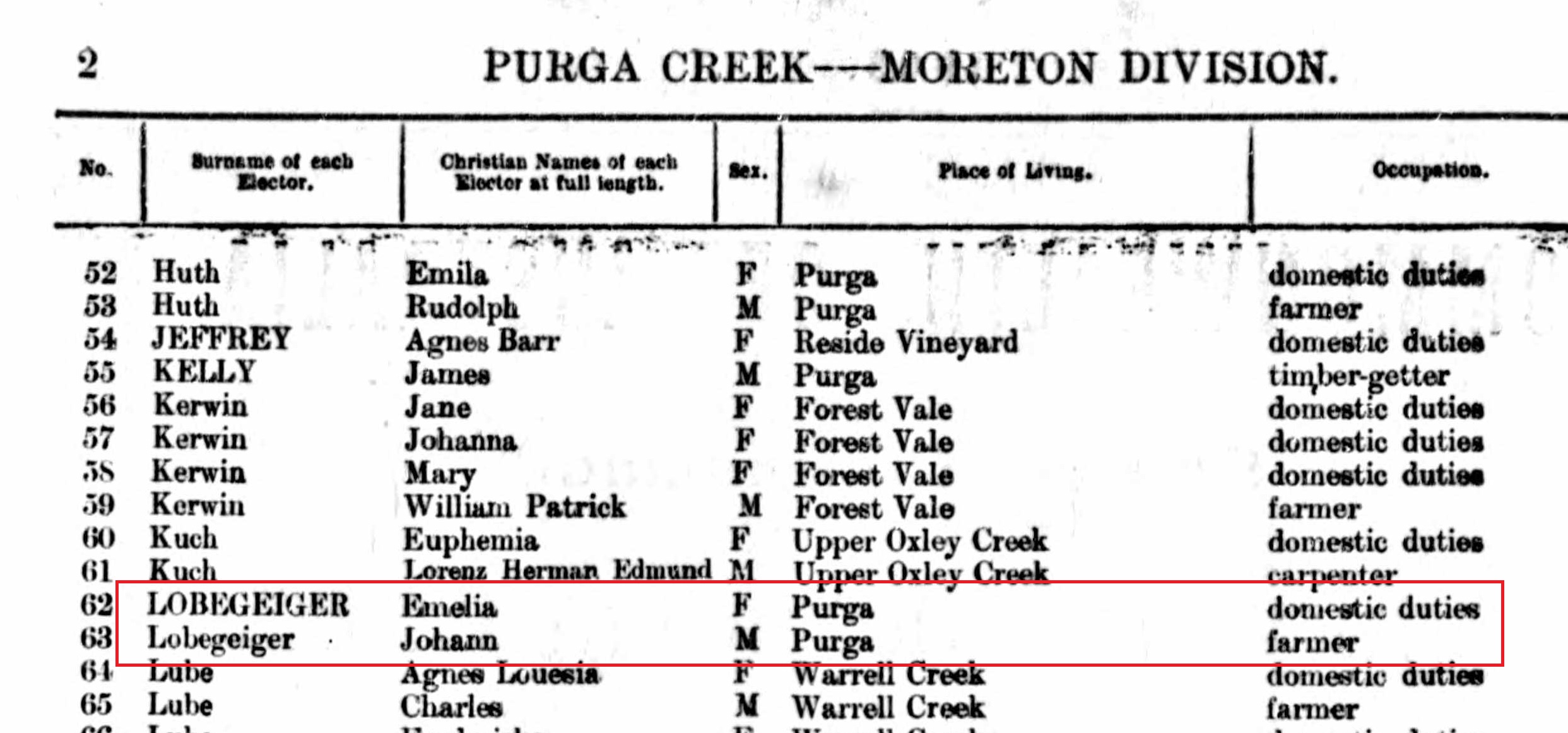
Emilie Albertine Louise Krueger married Johannes Lobegeiger on the 31st of January, 1889.
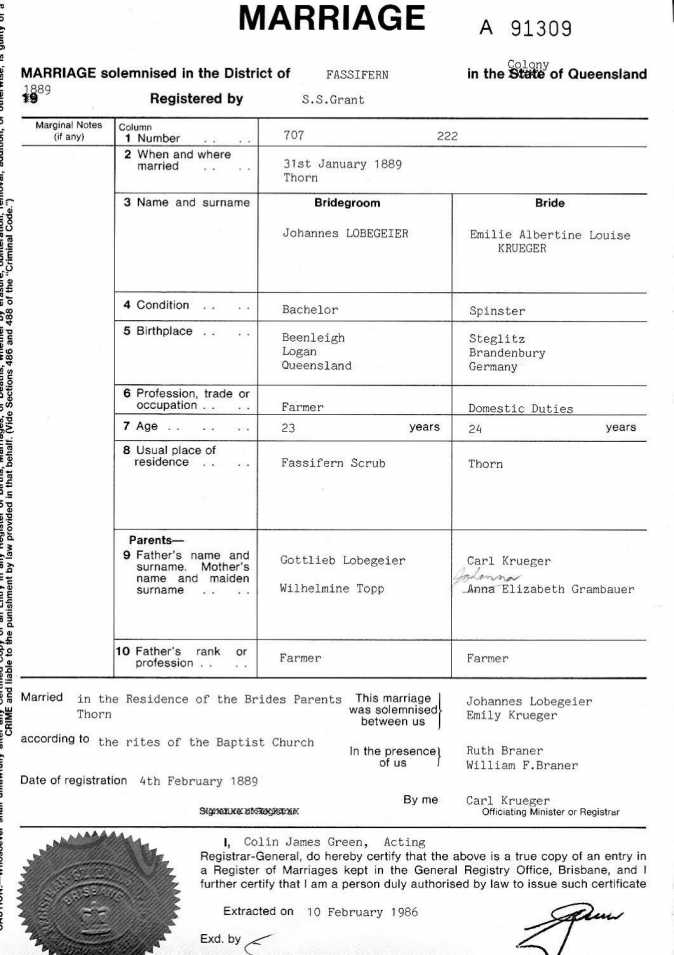
She was 24 years old & Johannes was 23. Most of the Germans had arrived in Australia holding their strong religious beliefs that they had brought from the old country. The majority were Baptists, Lutherans & Methodists. It appears that Emilies family, the Kruegers, had arrived in Australia as Lutherans & then later became Baptists (Emilies brother Carl Krueger Jnr was a Baptist pastor). There was a strong Baptist presence among the many German families around the Roadvale district.
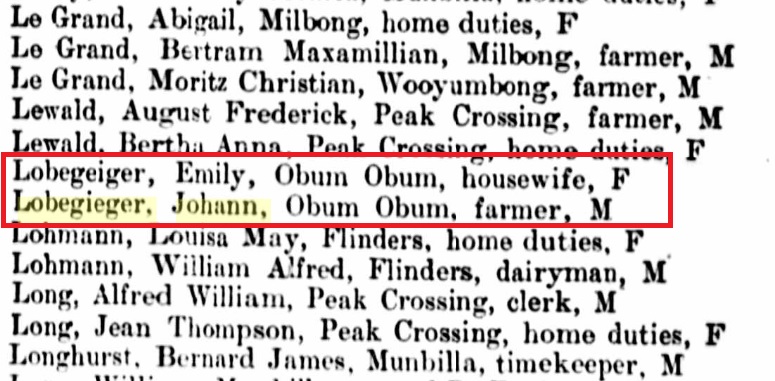
By 1889, twenty three year old Johannes Lobegeiger had moved to the Fassifern Scrub. He married 24 year old Emilie Albertine Louise Krueger on the 31st Jan 1889.


Excerpt from Engelsburg Baptist Minutes-25/4/1891 –
“Fourthly, it was reported that Wilhelm Topp had shot one of Lobegeiger’s cows. He acknowledged this and said that he did not want to shoot it only to scare it as it was always in his cornfield. He had shot it in the foot and in the shoulder. Brother Wilhelm Topp was asked to get reconciled with Johannes Lobegeiger by next members meeting”. Followed on 23/5/1891 by “Firstly Brother W. Topp was asked whether he had been reconciled with Brother Lobegeiger. He said that he had. They were then exhorted not to let such things happen again.”
Perhaps the attempted reconciliation hadn’t gone as well as could be expected.
I debated whether the next part was relevant to the story of Amelia and Johannes.
Amelia had a daughter, Agnes, born out of wedlock three and a half years before her marriage to Johannes. At that time in Australia’s history, society was ruled by ultra-conservative values. In truth, many children were born outside of marriage across the country, particularly among young Australian couples. With no birth control available, such situations were far from rare.
I share this detail not to destabilize the story or to cast Amelia in a negative light, but to provide historical context. Religion and conservatism dominated much of Australian society during that era. Strong Baptist values, deeply influential in places like the Fassifern Valley and across the nation, often made life extremely difficult for young women who became pregnant before marriage, as well as for their families.
Today, we take for granted how much moral values have shifted in a more compassionate and accepting direction. Back then, however, the attitudes toward girls in such circumstances were often harsh, with many facing ostracism from both their communities and families.
In Amelia’s case, Agnes was accepted into the family when Amelia and Johannes married, by which time Agnes was about three years old. This part of their story should be included, not to diminish the couple in any way, but because it remains an important part of their family history.

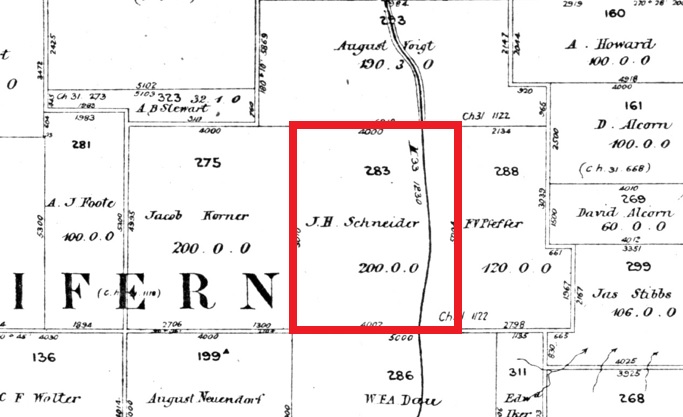
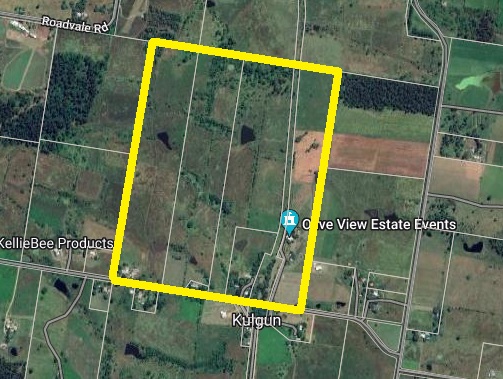
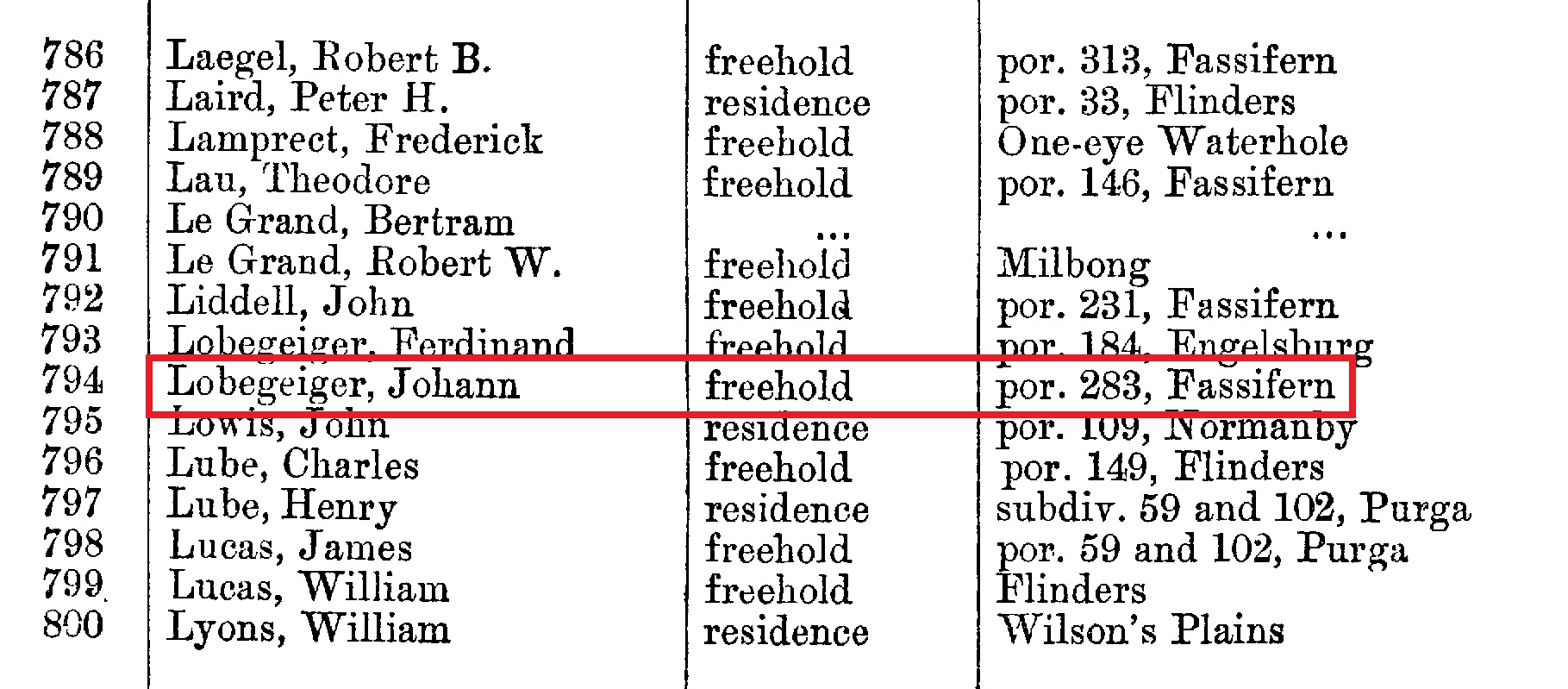
Soon after their marriage they moved to the 200 acre portion 283 in the parish of Fassifern at Kulgun which was originally selected by Johann Heinrich Schneider. In 1880 the property had a small slab house upon it. It appears that Johannes (John) Lobegeiger owned the larger (118 acres) part of portion 283 with the original selector Johann Heinrich (Henry) Schneider still owning at least 82 acres of portion 283.

He was issued with the livestock brand of UL9 in 1891.

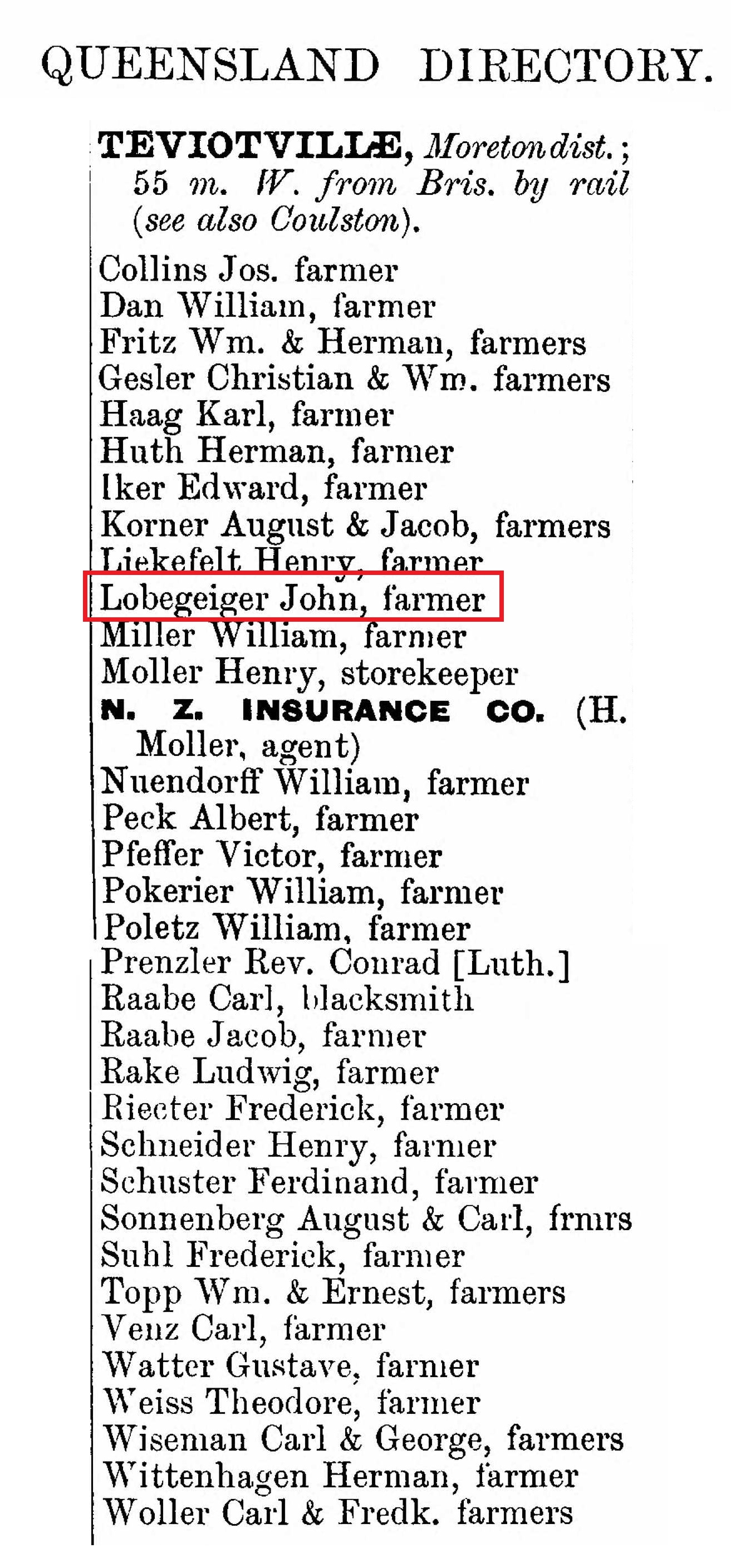
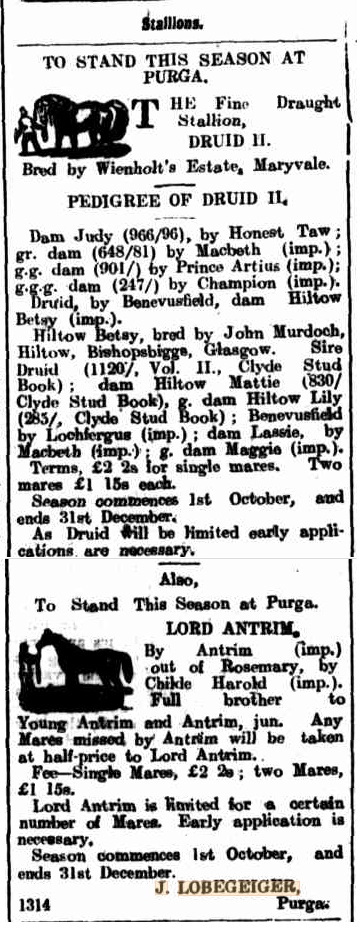
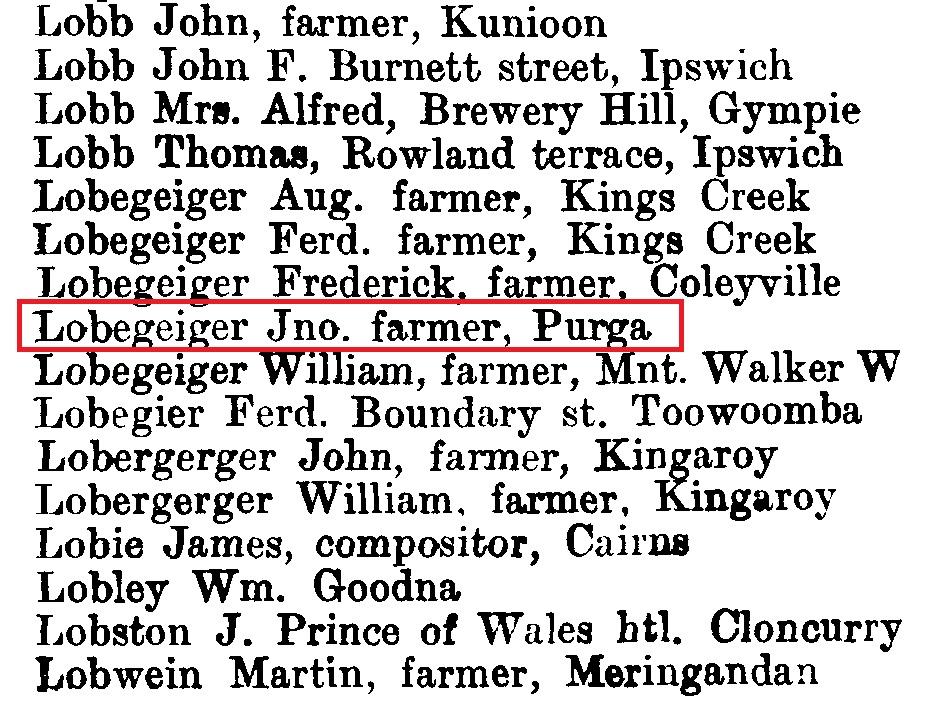
By 1902 Johannes & Emilie had moved to Purga where they bred horses. Johannes had the prize winner trotter stallion Antrim-Rosemary also known as Antrim Junior, the stud fee was £2 2s.


He must have had quite a number of horses at Purga as he was placing ads looking for agistment for 50-70 horses in 1902.

Antrim-Rosemary placed 1st for the best trotting stallion at the 1903 Ipswich show , Antrim-Rosemary was described as a high quality dark bay , rather light in the legs but a real picture in appearance and shows fair action.

In 1904 Johannes had purchased Draught stallion “Hero the second” from the Wienholt brothers.
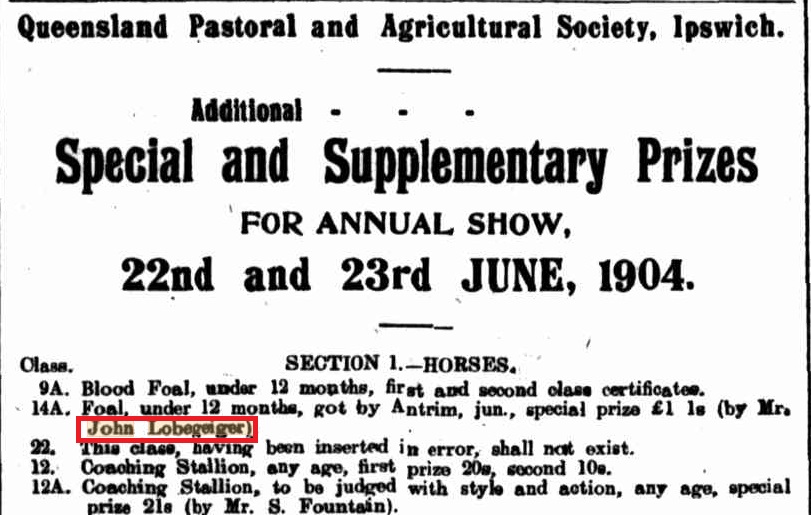
At the 1904 Queensland pastoral and agricultural society show Johannes took out best foal under 12 months for a foal bred by Antrim Junior , for the 1904 breeding season Johannes was advertising two stallions , one being the Draught stallion Druid II and the other Lord Antrim , terms £2 2s for each stallion.
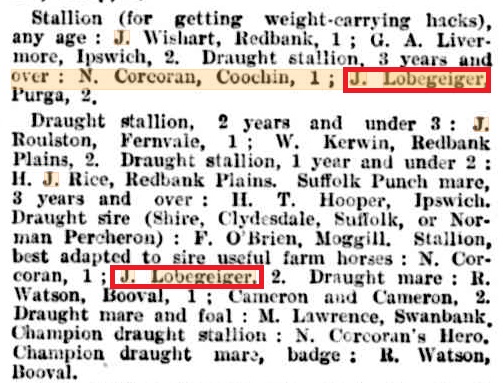
At the 1905 Ipswich show Johannes won 2nd place for a stallion (for getting weight carrying hacks) and 2nd place for stallion best adapted to sire useful farm horses.
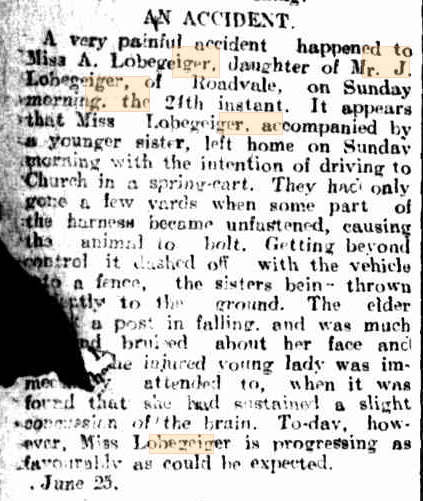
In 1906 Johann had moved to Obum Obum , in June of that year two of his daughters who were driving a spring cart to church when part of the harness came undone causing the animal to bolt , the vehicle hit a fence and the sisters were thrown onto the ground , the elder sister hit a post and was much bruised about the face resulting in a slight concussion.
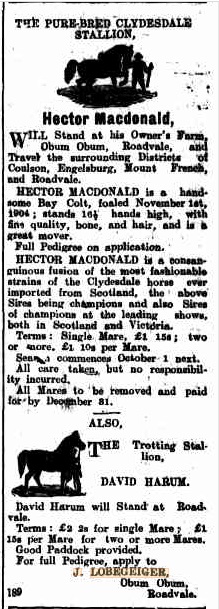
During the 1906 breeding season Johannes advertised the trotting stallion David Harum with a stud fee of £2 2s.

Johannes advertised the Clydesdale stallion Hector McDonald during the 1908 breeding season which was described as being a handsome bay colt foaled 1st Nov 1904 , stands 18 ½ hands high with fine quality bone and hair and is a great mover.

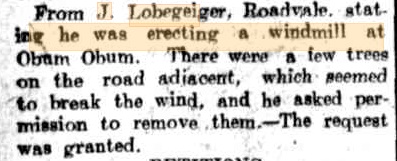
Johannes erected a windmill on his farm in 1915.

In 1918 Johannes had moved to Buderim on the Sunshine Coast. On the 8th of August 1918 Johannes & Emilie lost their 24 year old son John in World War One. He was killed in action in France.

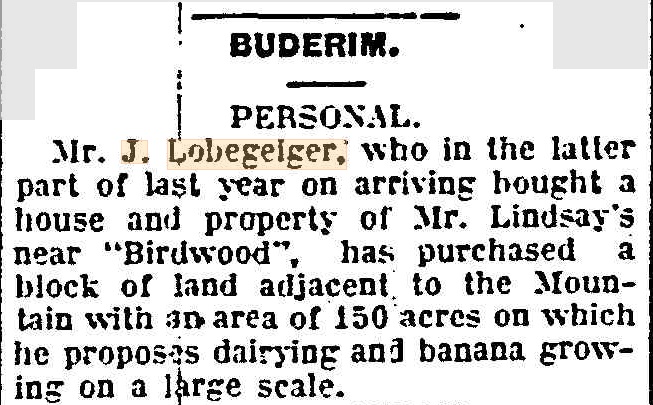

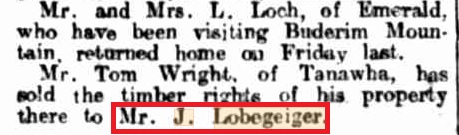
Johannes purchased at least two farms at Buderim , one of which was 150 acres where Johannes intended to grow Bananas and dairying , on the 1925 electoral roll he lists his occupation as a fruit grower.

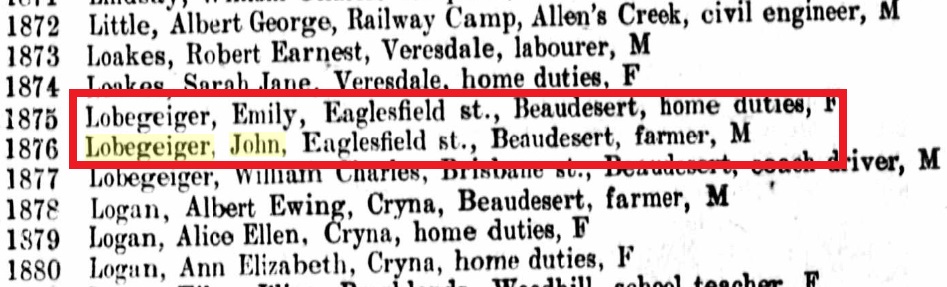
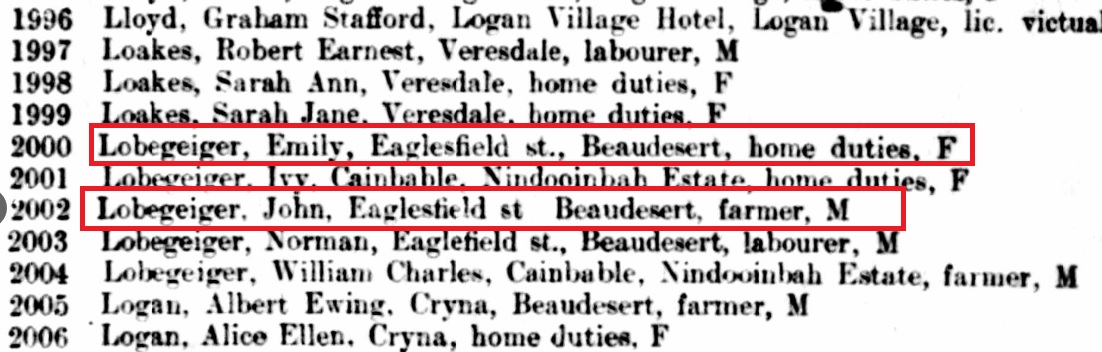
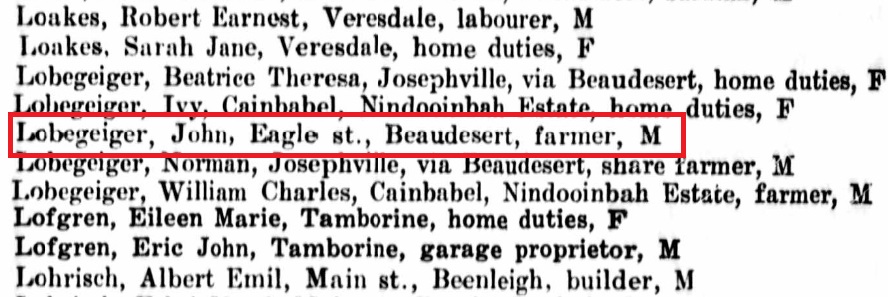
By 1928 Johannes have moved to Eaglesfield street Beaudesert.

The Beaudesert Times Fri 27 Mar 1931
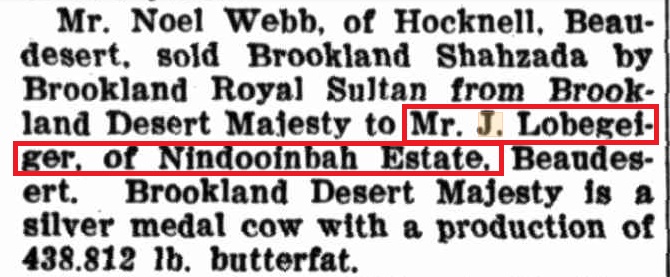
In 1931 Johannes purchased 467 acres in the parishes of Kerry & Sarabah at Cainbable Creek in the mountainous area near Beechmont.






In 1941 Mrs Emilie Lobegeiger passed away suddenly at Beaudesert from a heart seizure and was buried at the Beaudesert Cemetery.
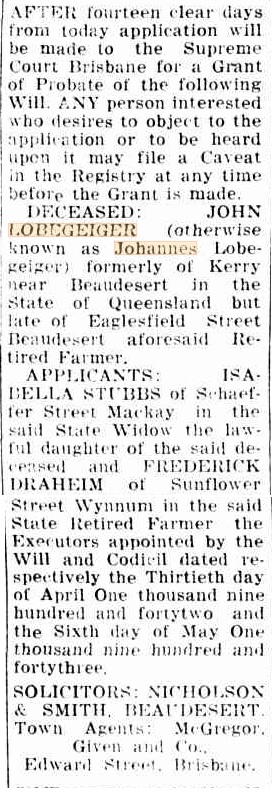
It appears Johannes was breeding cattle and pigs on this property , in 1941 he owned 100 cattle , he sold all his land there in 1943 and continued to live at Eagle Street Beaudesert until his death on the 3rd of June 1955 at the Beaudesert hospital , he was buried with his wife at the Beaudesert cemetery.
During their marriage Johannes & Emilie had at least 10 children of which seven were daughters and three were sons.
Emilie and Johannes Lobegeiger farmed in the Fassifern area at Roadvale (1889-1915), with a property also at Purga that they had obtained 1905. Many farmers increased their landholdings, as other farmers moved further up into the Fassifern Valley, with more land was being released & made available for farming. They weren’t afraid to try new & different forms of farming throughout their lives. Johannes & Emilie Lobegeiger moved to a farm at Buderim on the Sunshine Coast hinterland for a number of years (1918-1924), growing fruit. They then moved back to Obum Obum (near Roadvale), with a stint also farming at Manly on Brisbane’s bayside. Their last relocation was a move to Beaudesert in 1928, where they resided at Eaglefield Street in their retirement. Emilie and Johannes Lobegeiger had ten children – Agnes, Elizabeth, Annie (my Grandmother), Isabella, John (KIA WW1), Minnie, Violet, William Charles, Florence & Norman. Both William & Norman later had farms in the Beaudesert area.

Emilie Albertine Louise Lobegeiger (nee Krueger) died 26th February 1941 aged 76.

Johannes Lobegeiger died on 3 June 1955 (14 years after Emilie) in Beaudesert, Queensland, at the age of 89. Johannes & Emilie Lobegeiger are buried together in the Beaudesert cemetery.


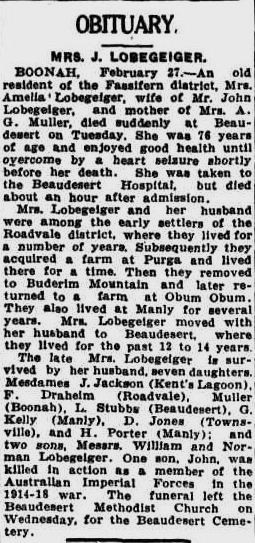
Queensland Times Fri 28 Feb 1941
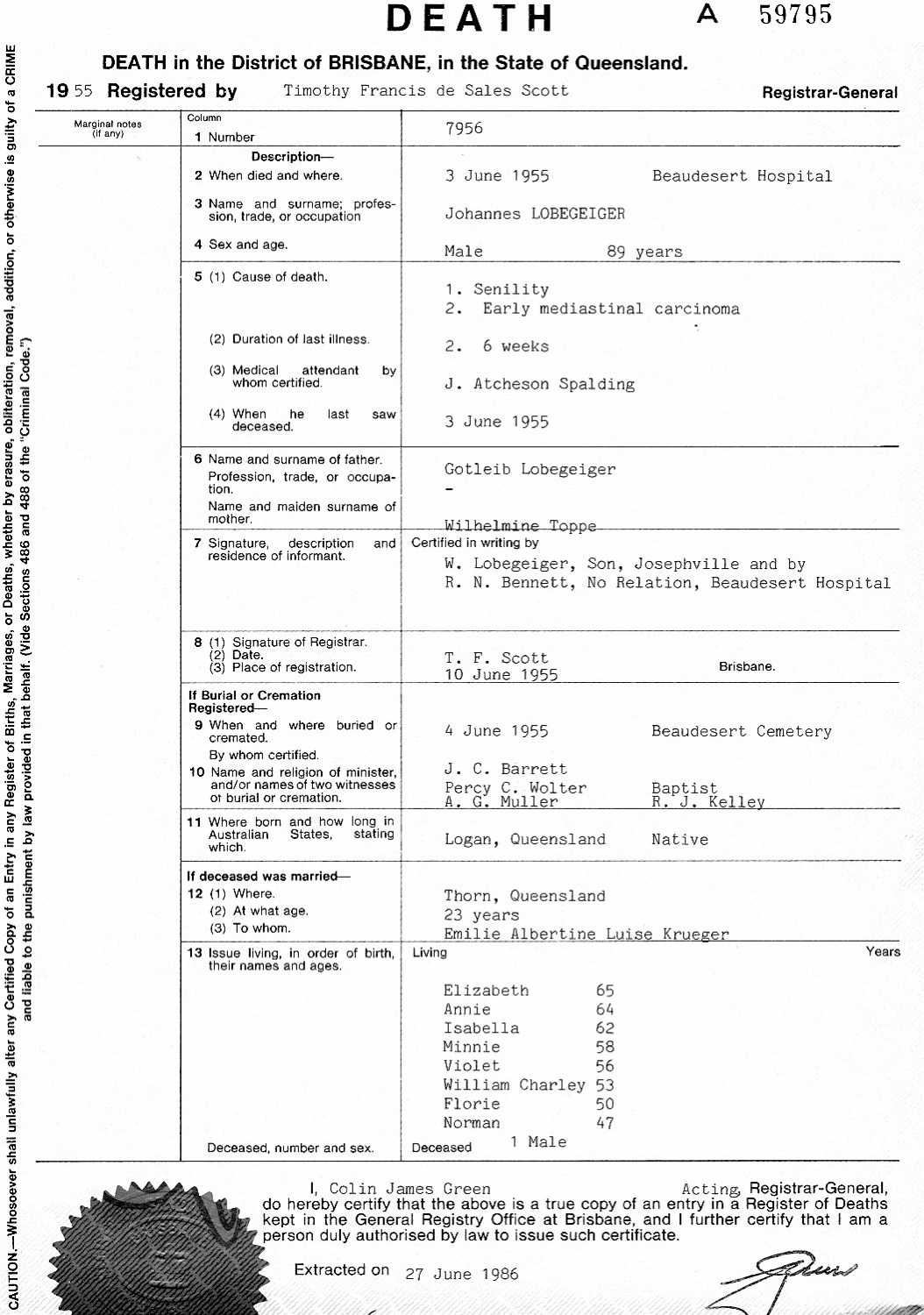
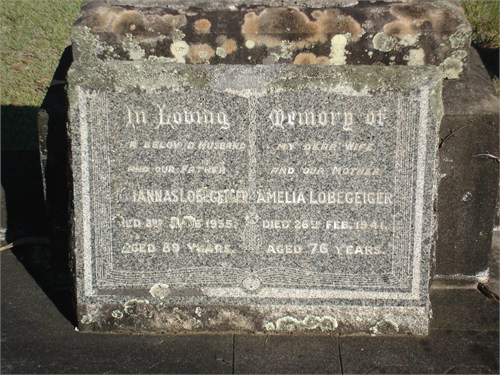
Emilie Lobegeiger (died 26 February 1941 age 76) & Johannes Lobegeiger (died 1955 age 89) are buried together in the Beaudesert cemetery.
I must aknowledge the reseach done by local historian Sharon Racine in compiling this record.

Annie Lobegeiger was my Grandmother. She was one of ten children and was born on 27th February, 1891, to parents, Johannes and Emilie Lobegieger, who were farmers at Roadvale, near Peak Crossing, Queensland.
On the 12th January 1910 she married Adolf Gustav (Alf) Muller, a young man from another local farming family.
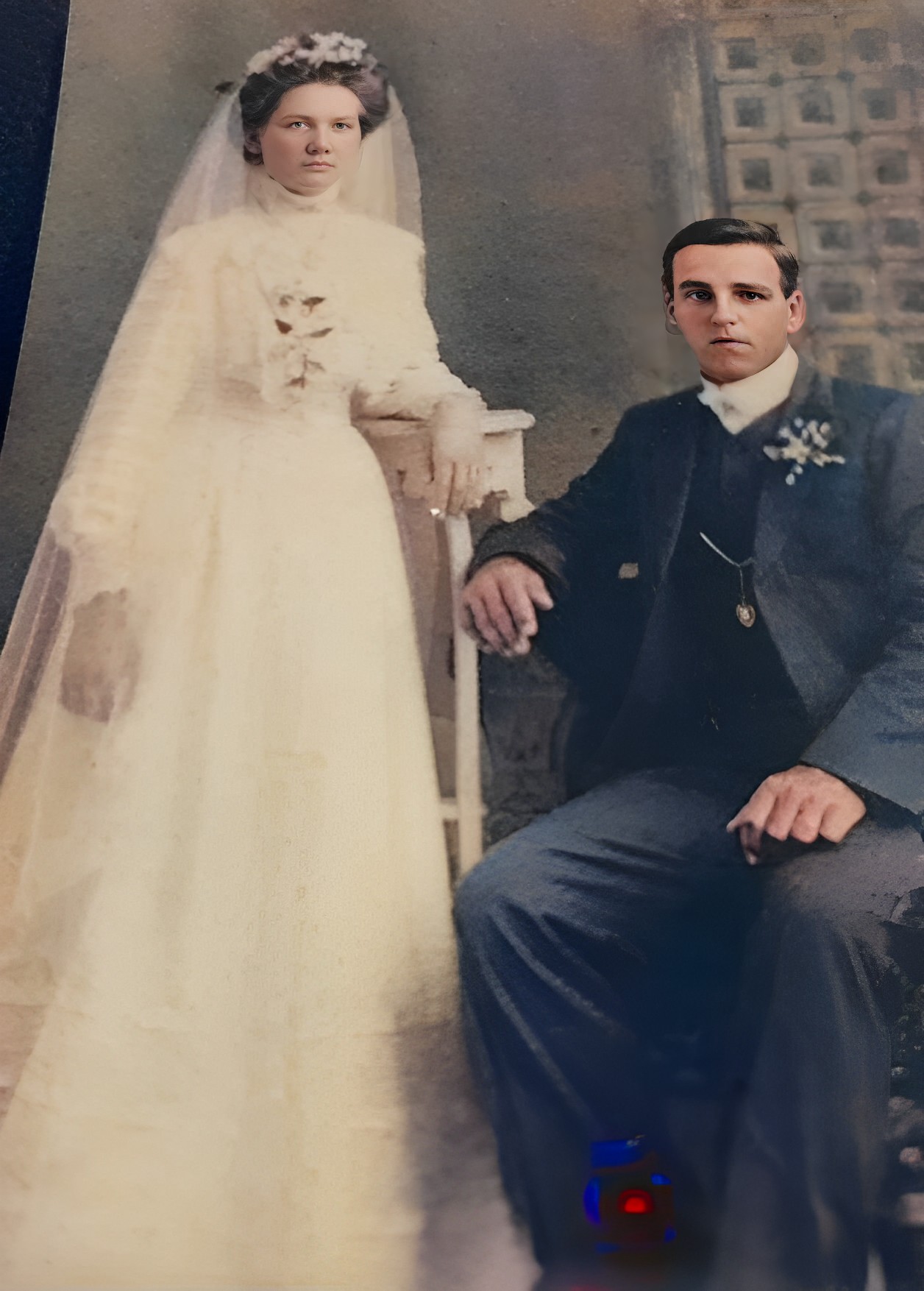
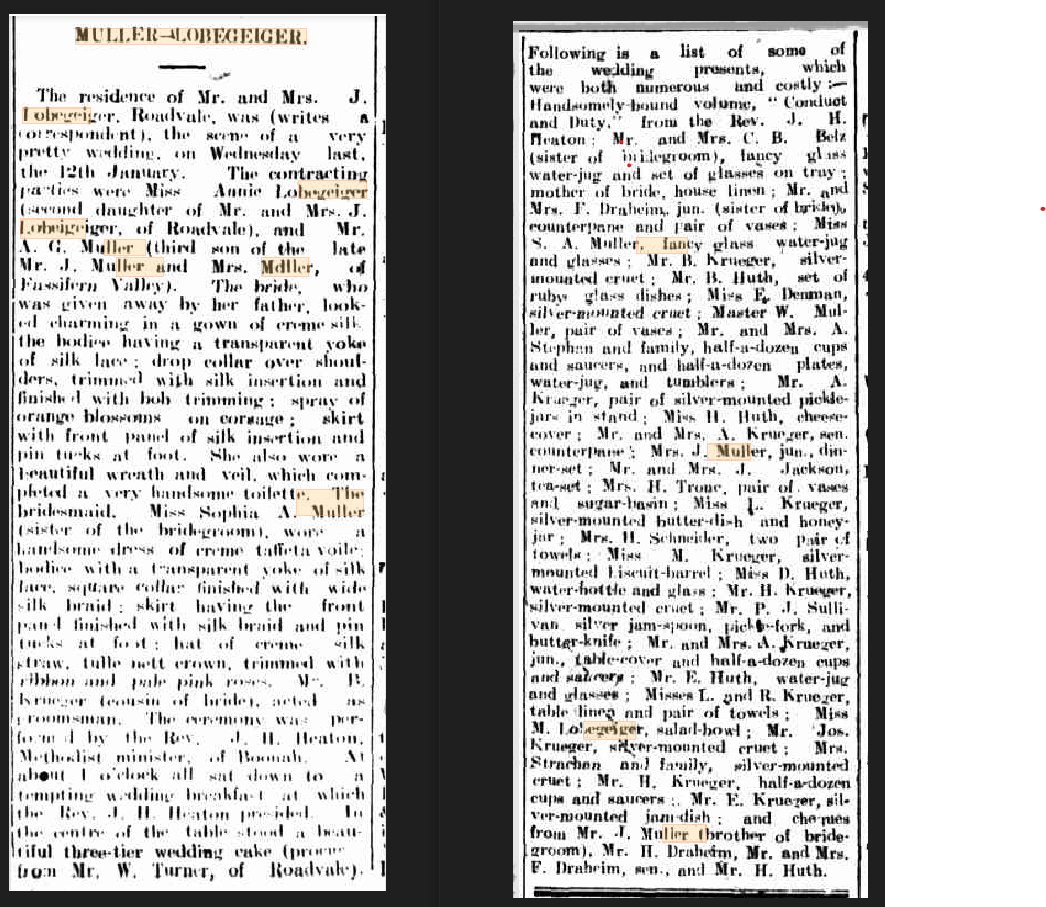
Annie and Alf Muller had four children – Phyllis, Vera, Mavis and Selwyn. The family lived in the Fassifern Valley, near Kalbar, and the four kids went to the local Templin school. The Muller family were dairy farmers in the Fassifern Valley, and also grew market garden crops.

Annie was a very unpretentious lady with a modest, almost shy personality. She had strong religious faith and was more comfortable at home with raising the family and being a good typical Queensland country wife. My apologies to all the feminists in our family, but that was a very characteristic description for conservative country ladies of the time. Her husband Alf was a farmer and by the 1920s, also an aspiring politician. I don’t believe Annie was overly enthusiastic about being involved with all the requirements of being a politician’s wife. The never ending meetings, electioneering, official openings, the ongoing travelling around the Fassifern electorate and the public functions etc weren’t entirely her cup of tea. But, as a dutiful wife, she performed all her obligations without complaint. By the end of the 1930’s decade, Alf & Annie Muller had moved into Boonah to live at 14 Macquarie street. As the girls in the family grew up, their only son, Selwyn was increasingly looking after the farm. By 1934, oldest daughter Phyllis was married to WW1 veteran James Alexander Yarrow & living in Ipswich, Vera had relocated to Brisbane in 1938 to take up a career in nursing and by 1943 Mavis was about to be married to local solicitor Jim Finney in Boonah. Only son Selwyn, was designated to be the farmer, and had taken over the reins of running the farm as Alf’s political career was on the rise. However, WW2 put a damper on that plan, temporarily. Sel enlisted in the army & served in the Middle East and New Guinea. He had married Patricia Margaret O’Callaghan in 1940. Selwyn John Muller later took over the state parliamentary seat of Fassifern, after Alf’s death in 1970, later becoming the Speaker of the house, in the Queensland state government Legislative Assembly.
Annie was at her happiest living in Boonah near family, friends and her involvment with church and local community endeavours. She loved her garden and cooking for the family whenever they visited. With Annie and Alf both coming from strong German religious backgrounds, they were active members of the Boonah Methodist Church community, for all of their lives.
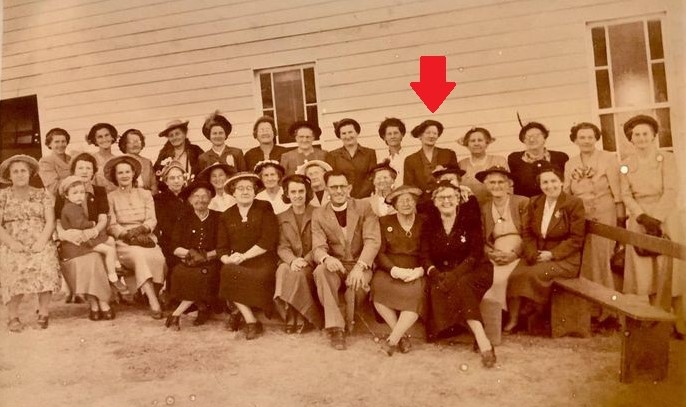
None of the family photo’s we have, captured her with a smile, however I will always remember her as being a happy, softly spoken, gentle lady who cared deeply for all her kids and grandchildren. To me, as a kid, she was your quintessential Grandma. She loved fussing over us and always took time to spoil us whenever she had the opportunity. We had many happy Christmas family celebrations & family visits at Nana & Papa Muller’s home in MacQuarie street Boonah.
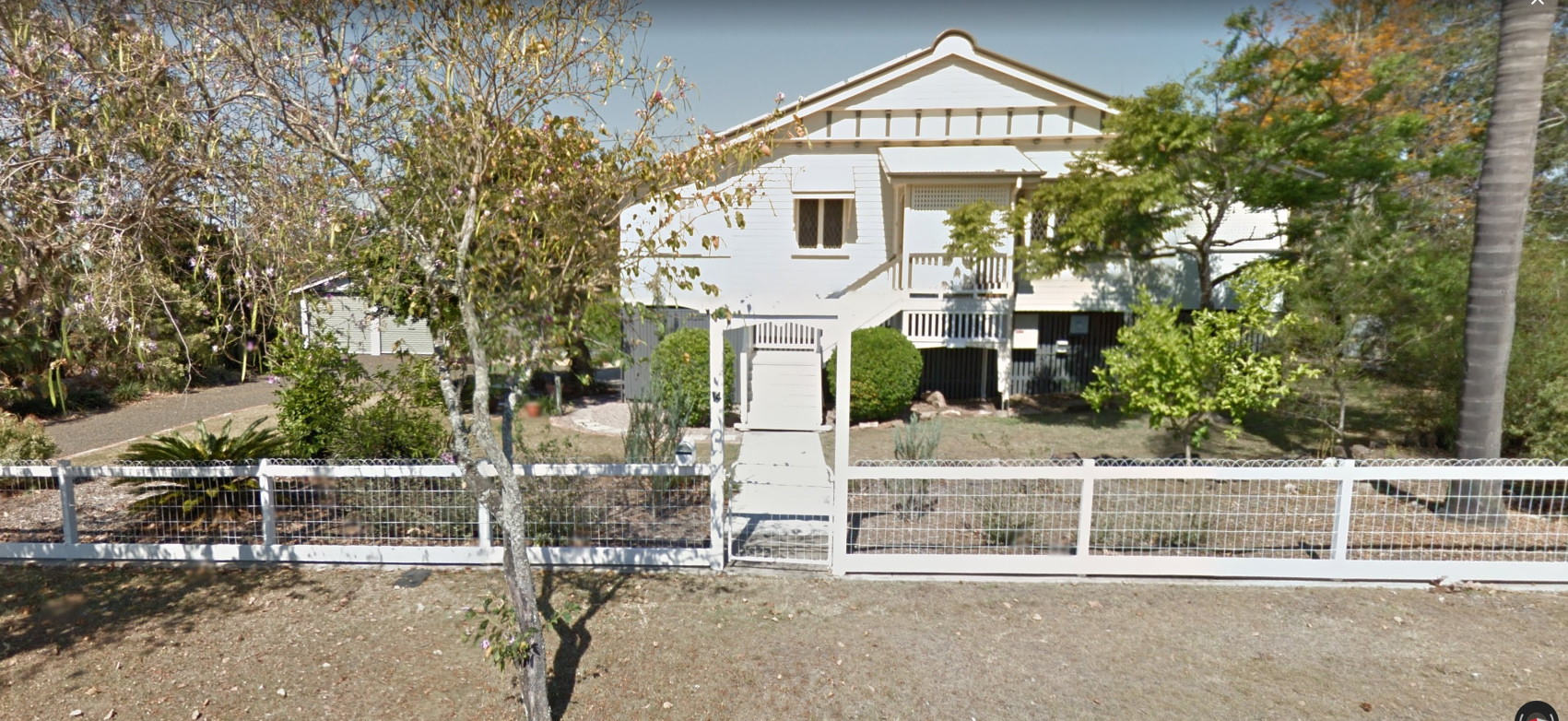
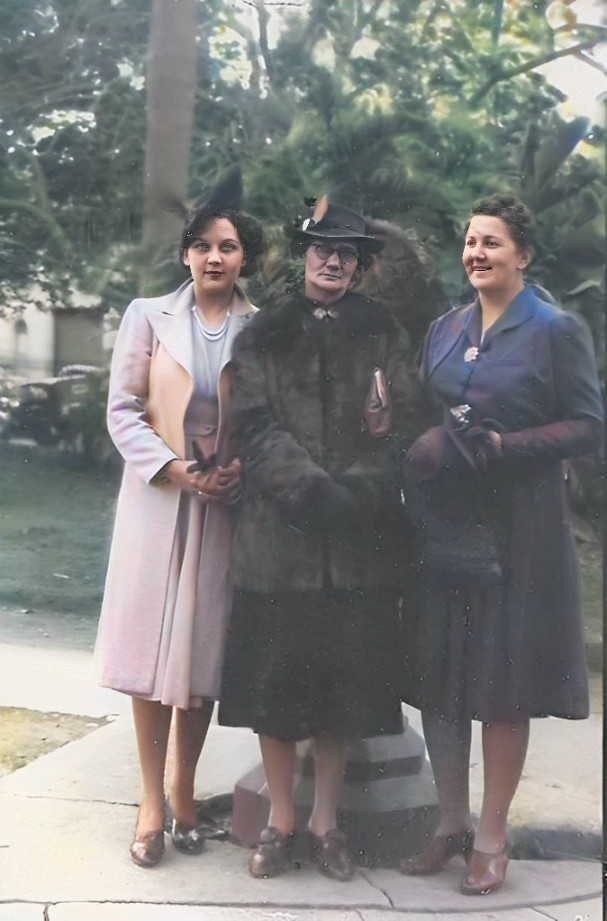
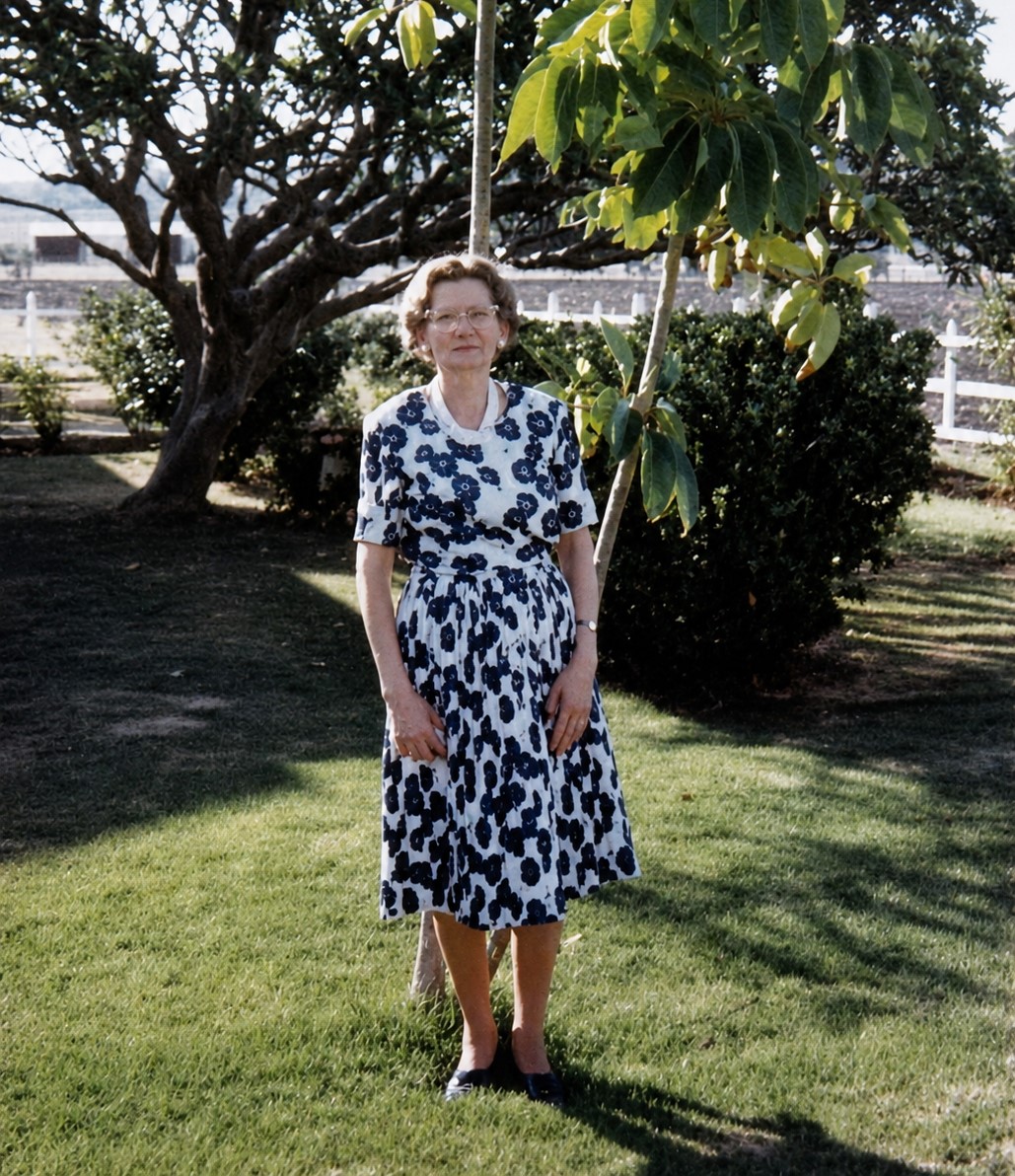

Annie Muller died on New Years Eve 1979, just five months after her husband A G (Alf) Muller had died. Annie & Alf are both buried at Kalbar cemetery. She and Alf had the four kids, who went on to produce twelve grandchildren, one of whom is the author of this article.
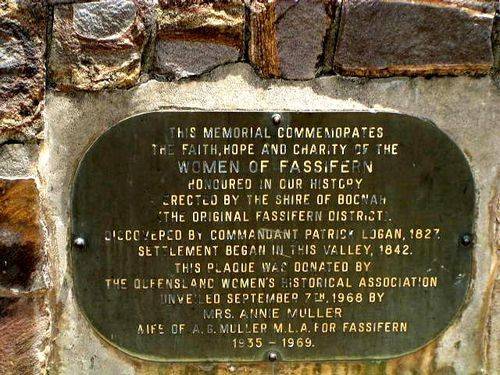
Check out the following article I’ve done on Johannes Muller & son A G Muller (Annie’s husband) https://porsche91722.wordpress.com/2023/02/03/johannes-john-muller/
Thanks to Sharon Racine, a local historian who provided invaluable assistance in providing information.
As always, if anyone has verifiable facts that would correct or alter any part of my stories where I may have got the details wrong, please let me know. I genuinely welcome constructive criticism and am always happy to correct an error when the evidence shows that I have done so.
I’m not interested in rumour, speculation, hearsay, or innuendo. I’m interested in the truth — the absolute, verifiable truth supported by reliable evidence.
Geoff Bermingham


